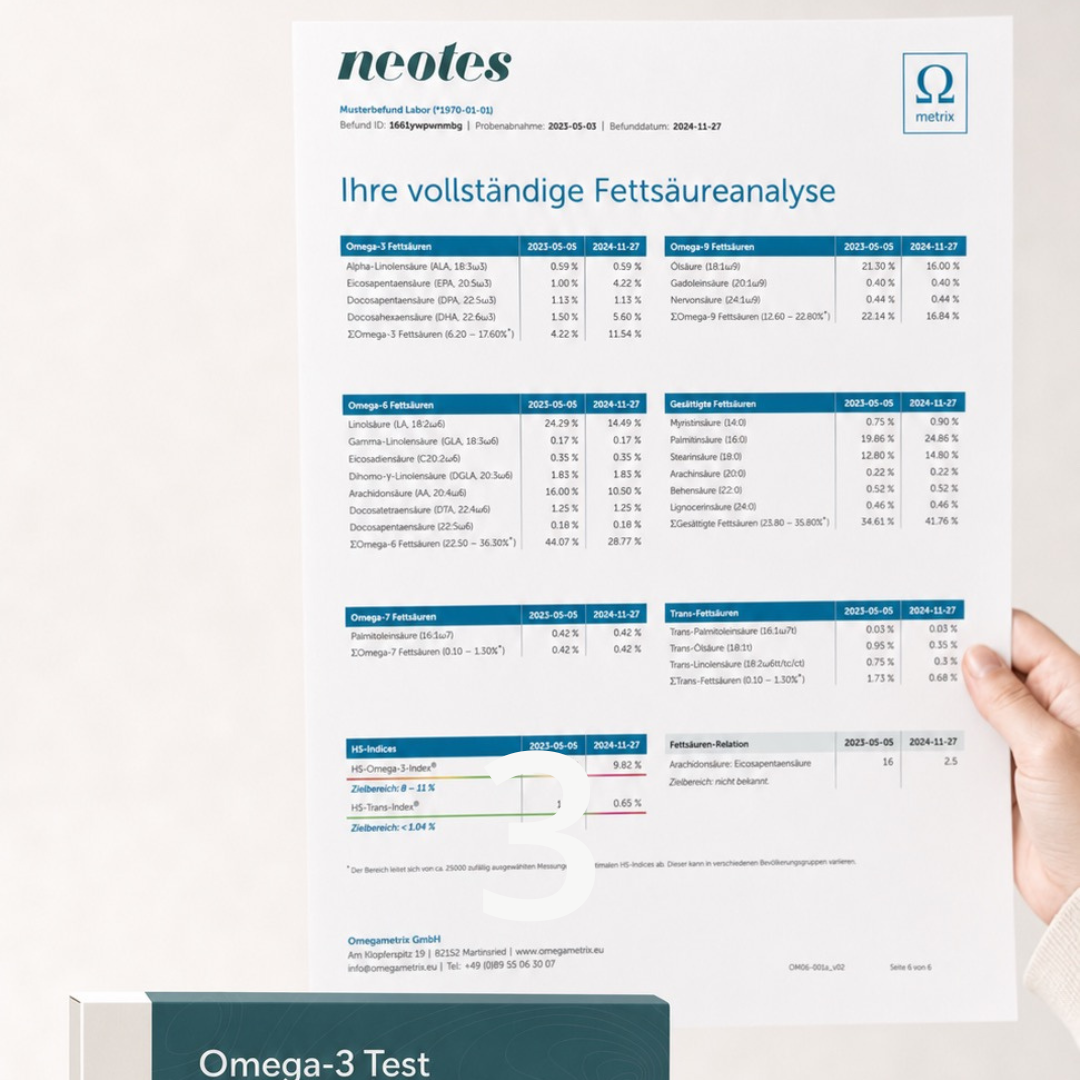
Omega-3 and omega-6 fatty acids, like our hormones, play a crucial role in our physical and mental well-being and have a significant influence on the ageing process. The level of the HS-Omega-3 Index® is associated with several health-related parameters.
Omega-3 fatty acids are known for their anti-inflammatory properties, their ability to support heart health and their positive effects on brain health. Omega-6 fatty acids, on the other hand, can support pro-inflammatory processes if they are consumed in excessive amounts.
Researchers assume that our ancestors consumed a diet with an omega-6 to omega-3 ratio of approximately 1:1. Today, however, the ratio is often around 15:1 or higher, indicating excessive omega-6 intake and insufficient omega-3 intake.
An adequate supply of omega-3 may therefore reduce the risk of heart attack, cardiovascular disease and associated mortality. A sufficient intake of DHA and EPA, which are found in cell membranes throughout the body and influence their function, is therefore important.
DHA, which is particularly abundant in the grey matter of the brain, influences many processes such as neurotransmitter release, signal transmission and gene expression. An adequate intake of DHA may be a biologically plausible way to support brain function.
Note: A balanced diet and a healthy lifestyle as a whole are important for slowing the ageing process and reducing the risk of age-related diseases.