The body’s detoxification takes place in the liver in two phases that work together to render harmful substances such as toxins, medications or metabolic waste harmless and remove them from the body.
Phase 1: Preparation of toxins In the first phase, the harmful substances are chemically modified by special enzymes (primarily the so-called cytochrome P450 enzymes). This often produces more reactive and sometimes even more toxic intermediates. This phase prepares the substances to be finally neutralised in the second phase.
Phase 2: Neutralisation and excretion In the second phase, the reactive substances from phase 1 are rendered harmless through so-called conjugation. This means that the body links them with other molecules such as glutathione, sulfate or glucuronic acid. This makes the substances water-soluble so that they can be excreted via urine or stool.
Phase 1 does prepare the substances for detoxification, but it can also make them more dangerous if phase 2 does not function properly. That is why it is important that both phases work well together. If phase 1 works too quickly but phase 2 cannot keep up, toxic intermediates can arise that burden the body.
An inefficient phase 2 can mean that the body does not fully excrete toxins, which can lead to chronic inflammation or oxidative stress.
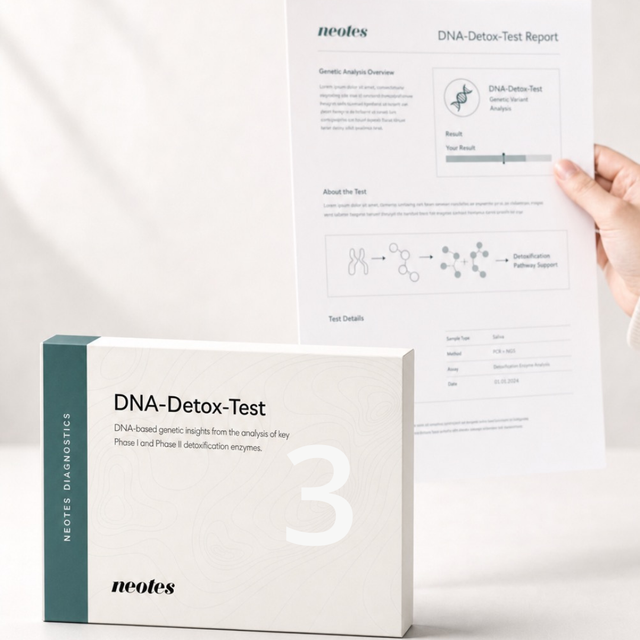
The efficiency of phase 1 and phase 2 is partly determined by genetic factors. Some people have genetic variants that influence the activity of the detoxification enzymes – either speeding them up or slowing them down. A DNA Detox test can help to identify these genetic differences.