SKIN GENE

    Skin DNA Test

    ★★★★★
    ★★★★★
    4,81 / 5 · 126 reviews

    Discover what shapes your skin over the long term. The Skin DNA Test analyses seven selected genetic variants associated with pigmentation, UV response, collagen structure and cellular ageing processes. This gives you a stable, personal basis for aligning skin protection, skincare and skin longevity more consciously.

    • Personal DNA profile for skin longevity and prevention
    • Seven selected variants across four understandable thematic areas
    • One-time analysis – genetic findings that can be used over the long term
    • Personal Skin & Longevity Report with clear classification
    • Well-founded guidance for UV protection, skincare and long-term prevention
    Sale price €199,00 Regular price
    Regular price €199,00
    Tax included. Shipping calculated at checkout.
    Skin DNA Test
    Sale price €199,00 Regular price
    Regular price €199,00
    Delivered within 1–3 business days Free shipping

    Your DNA as a compass for healthy skin ageing.

    • 7 relevant gene variants – A personal view of four key areas of skin longevity and prevention.
    • Four skin-longevity modules – Pigmentation, UV response, matrix/collagen and cellular ageing pathways summarised in an understandable way.
    • Test once, use long term – The DNA variants examined remain stable and provide findings that can be used permanently.
    • Personal prevention guidance – Clear indications for UV protection, skincare and a conscious skin-longevity routine.
    Your DNA as a compass for healthy skin ageing.

    What does the report include?

    Skin gene profile

    Skin gene profile

    Overview of your analysed genetic variants in selected skin-related genes.

    Pigmentation & UV

    Pigmentation & UV

    Insight into genetic factors linked in research to pigmentation and UV response.

    Collagen & skin structure

    Collagen & skin structure

    Information on genetic variants in the context of collagen breakdown and the skin matrix.

    Cellular protection & DNA repair

    Cellular protection & DNA repair

    Assessment of genetic factors involved in the stress response, DNA stability and cellular protective mechanisms.

    Telomere biology

    Telomere biology

    Insight into genetic factors associated with telomere maintenance and cellular ageing processes.

    Skin care guidance

    Skin care guidance

    General guidance on UV protection, skin care, diet and a mindful longevity routine.

    Understanding the Skin DNA Test

    The Skin DNA Test shows which genetic variants may be associated with pigmentation, UV response and sun-related skin processes. This stable perspective complements your visible skin type and makes individual protection needs easier to understand.

    In the report, you can see which preventive priorities may be particularly relevant for UV protection, skincare and your long-term skin-longevity routine.

    How does the Skin DNA Test work?

    Skin DNA Test step 1: prepare or activate the test kit

    1. Step

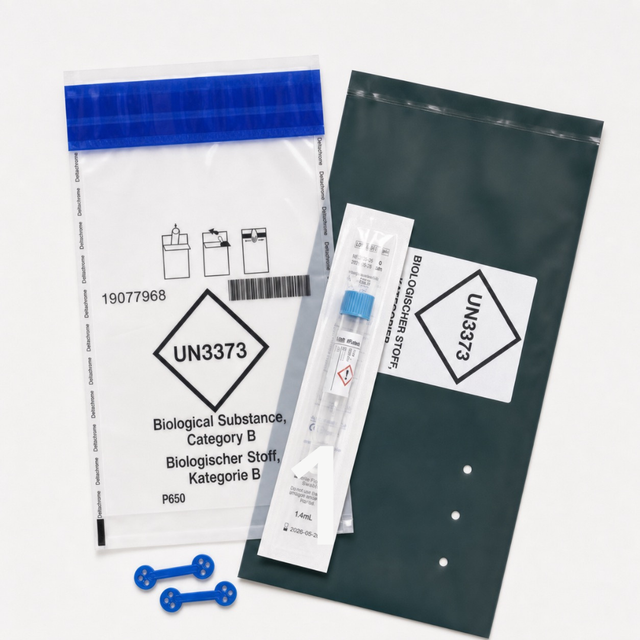
    Order your Skin DNA Test and, following the preliminary consultation, receive your test kit at home within 1–3 working days. Then complete the enclosed documents.

    Skin DNA Test step 2: collect a cheek swab sample and prepare it for return

    2. Step

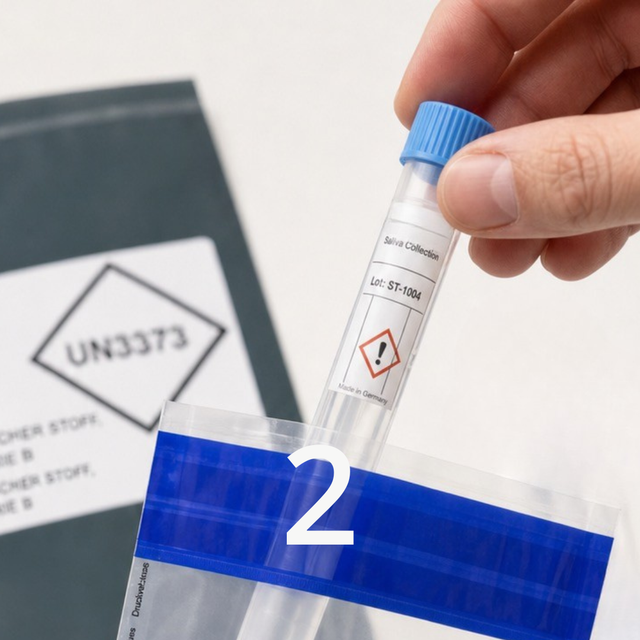
    Use the swab to collect a buccal mucosa sample and place the swab in the sample tube. Put the sample tube and documents in the prepared return envelope and send it.

    Skin DNA Test step 3: view the digital analysis report

    3. Step

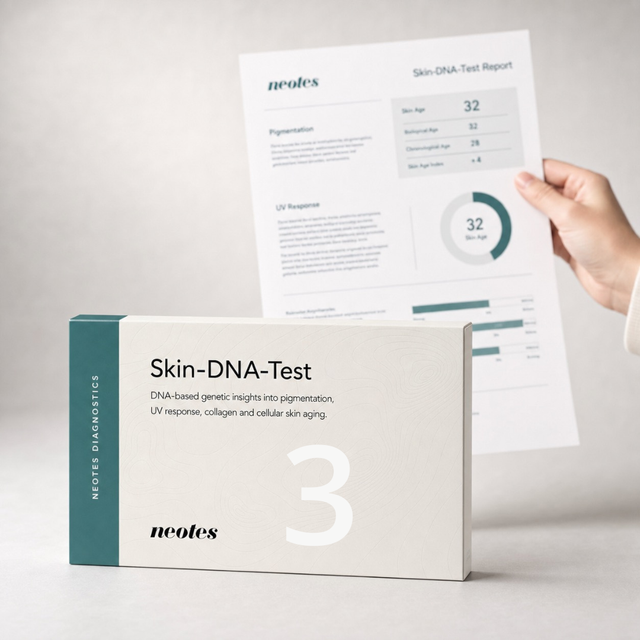
    In a certified German laboratory, defined variants are analysed using established molecular-biological procedures. Your Skin DNA Report is available after approximately three weeks.

    FAQ

    We have the answers

    The Skin DNA Test is a genetic self-test that you can conveniently take at home after a preliminary consultation with a doctor or qualified professional. You receive a test kit with detailed instructions and collect a cheek swab yourself, which is then sent to a specialised laboratory.

    The Skin DNA Test examines selected genetic variants in genes and DNA regions relevant to the skin. These genetic characteristics are stable and generally do not change over the course of your life. The test assesses your genetic starting point in the context of pigmentation, cellular protection, DNA stability and age-related skin characteristics.

    In contrast, the bioAge Test measures epigenetic methylation patterns and other markers in the blood. These can be influenced by factors such as diet, exercise, sleep, stress and the environment, and can change over time.

    The test is intended for adults aged 18 and over who would like to better understand their genetic starting point in the context of skin protection, pigmentation and age-related skin characteristics. It is particularly relevant for people who want to make more informed long-term choices about their skin care, UV protection and lifestyle.

    Test kits can usually be stored for several months. You will find the exact expiry date on the packaging. Keep the kit dry and at room temperature, and use it no later than this date to safeguard the quality of the sample.

    The test kit contains everything you need to collect your sample: one or more swabs for taking a cheek swab, an illustrated step-by-step guide, labelling stickers and return packaging for sending the sample to the laboratory.

    The Skin DNA Test can make a thoughtful gift, for example through our digital Longevity Card gift voucher. The recipient can then choose and order the Skin DNA Test themselves and follow the entire process independently.

    After the preliminary consultation, collect the cheek swab as instructed: rub the swab firmly against the inside of your cheek for the specified amount of time, let it dry briefly, then place it in the tube or protective sleeve provided. Package the sample as described and send it to the laboratory using the enclosed return envelope.

    Please follow the instructions in the leaflet. For the specified period before collecting the sample, avoid eating or drinking, apart from small amounts of water. Also avoid smoking, chewing gum and sweets. Do not touch the tip of the swab with your fingers or other surfaces, as this could contaminate the sample.

    Yes. Intensive oral hygiene immediately before sample collection can affect the number of cheek cells collected and leave toothpaste or mouthwash residues in the sample. Therefore, do not brush your teeth or use mouthwash for at least 30–60 minutes before taking the cheek swab.

    You can generally collect the cheek swab at any time of day. Choose a time when you can comfortably observe the recommended intervals after eating, drinking, smoking and brushing your teeth.

    Ideally, send the sample on the day of collection or on the next business day. This keeps transport and storage times as short as possible. If you cannot send it immediately, store the sealed sample as instructed and send it within a few days.

    Store the sealed sample in a dry place at room temperature, away from direct sunlight and large temperature fluctuations. Send it as soon as possible to help maintain optimal sample quality.

    Yes. If you would like support, you can collect the sample together with your doctor. However, it remains a self-test whose sample is sent to a specialised laboratory.

    The Skin DNA Test analyses selected genetic variants in genes and DNA regions relevant to the skin. Research has linked these variants to areas including pigmentation, cellular stress response, collagen processes, DNA stability and telomere biology.

    The results assess your genetic starting point in these areas. They can indicate which genetic factors are more neutral, protective or potentially sensitive.

    The results report presents your genetic variants for selected skin-related genes in a structured format. For each area examined, you receive information about the function of the gene, your individual genotype and an understandable interpretation.

    The report also contains general, non-therapeutic guidance on skin protection, UV exposure, diet, recovery and other lifestyle factors, which you can discuss with dermatological or medical professionals if needed.

    Analysis usually takes about three weeks after your sample arrives at the laboratory. You will be notified once the report is ready and can view your result on the secure platform.

    As this is a genetic test, the underlying genetic information does not normally change over the course of your life. A correctly performed Skin DNA Test that yields an analysable result therefore generally does not need to be repeated. Retesting may be appropriate only if a sample cannot be analysed for technical reasons or if expressly recommended by your doctor.

    Your genetic data are processed in pseudonymised form. The laboratory works with a sample code rather than your name. The digital results report is made available on a secure platform, and data are processed in accordance with applicable data protection and security standards.

    A preliminary consultation with a doctor or qualified professional is an important part of the Skin DNA Test. During this conversation, you discuss whether the test suits your personal questions and which topics, such as skin protection, pigmentation or age-related skin characteristics, are most relevant to you.

    Consultations are currently conducted in German. Further languages may be added in future. Please contact us if you have a particular requirement.

    An additional medical consultation after receiving the result is not mandatory as standard. However, you can discuss your report with your treating doctor or a dermatology professional. If desired, you can also book a separate longevity or skin consultation.

    If desired, you can book an additional specialised consultation. This places the results of the Skin DNA Test in the broader context of skin care, UV protection, diet, lifestyle and long-term prevention, helping you plan practical measures for your personal skin care routine.

    Yes. You can also discuss the genetic findings with your GP or specialists, for example in dermatology, preventive medicine or nutritional medicine. Combining the genetic interpretation with your individual clinical situation allows a more informed personal assessment.